
The Legacy of a Shameless Life
What Dolly Parton Taught Me About Shame, Dignity and the Courage to Be Seen
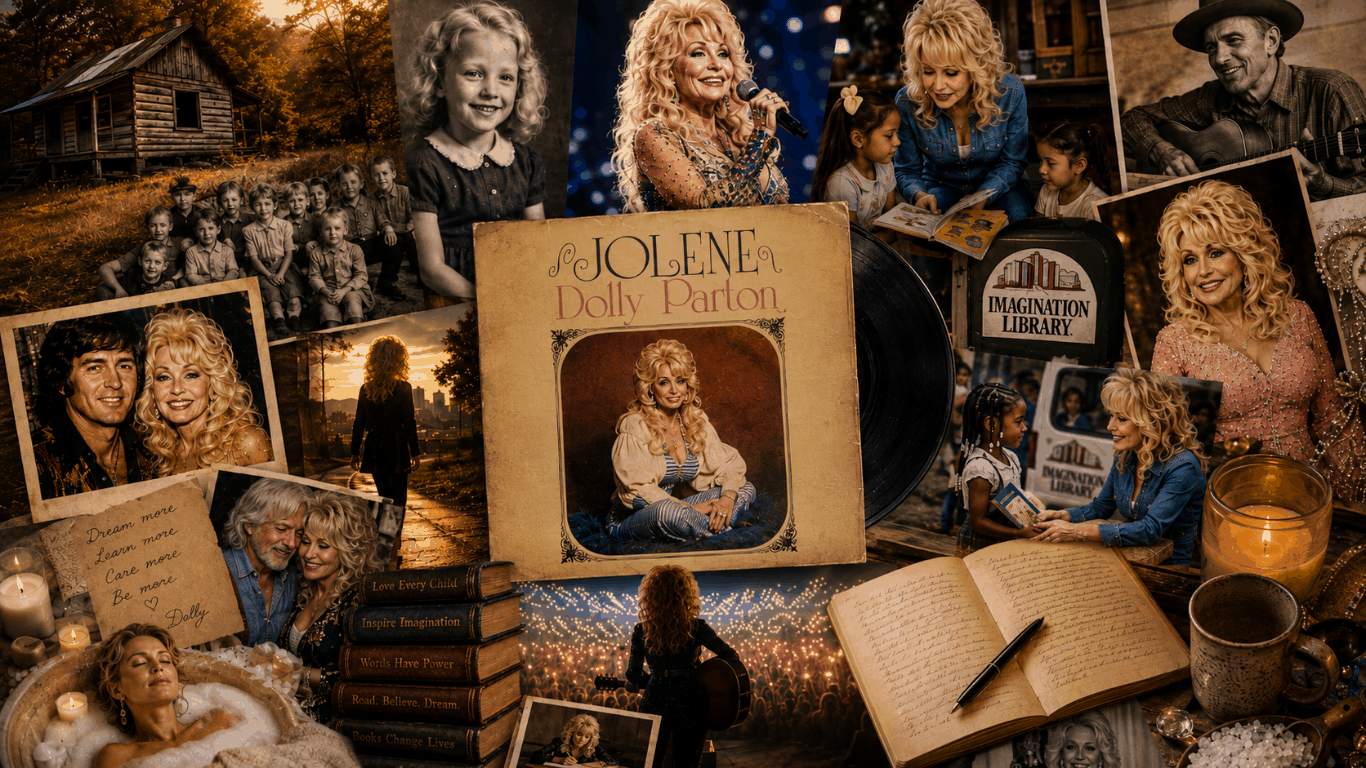
This past Friday night, I poured myself a steaming hot Epsom salts bath after an intense week and suffused myself in the haunting ballads of Dolly Parton in the week of her momentous passing.
You see, growing up, I had identified so strongly with the haunting sounds and lyrics of Jolene. It had become part of my life script in some ways.
I had always doubted my good enoughness. Even after marrying at an older and wiser stage, my self-esteem was so bad that I wondered why anyone would want to marry me. I knew I had always tried to be a good person and to contribute some positive meaning through my work. But my sense of self had been shaped by early turbulence and the sheer dread that someone might leave me when they found out who I truly was.
I married a man, my beautiful husband, who has been an antidote to that eroding self-portrait I carried for so many years. In the early years of our marriage, I was extremely threatened by the beautiful flirtatious “Jolenes” who sometimes popped up in our entrepreneurial journey.
My husband has always been extremely faithful and supportive of my multifaceted journey in every way. He has been my healing and my wholeness. But I was still incredibly threatened when he just spoke to a beautiful woman. As a very aesthetic man and a creative, he is drawn to charismatic people.
I know that now, and I celebrate that now, because I have walked such a long journey with shame.
Now, when we see a beautiful, charismatic woman, I celebrate her wholeness. To me, beauty is not the outward manifestation, but the inward journey reflected in the radiance of one's soul. It’s, to me, what true beauty reveals.
But my journey through shame has been long and tortured.
Despite winning entrepreneurial accolades, I battled relentless impostor syndrome. I was extremely conservative and quite prudish until, a third of the way through our entrepreneurial journey in 2010, we discovered that our trusted bookkeeper of eight long years had been defrauding us to the dramatic tune of 1.5 million dollars, which is 25 million rand in today’s currency.
We were broken and on our knees. We both retreated into our dark caves of shame to process the enormity of how this painted us, buried in shame. For two years we had to witness the quiet derision in our scared employees' eyes.
We had been winning awards. We had been featured on television, on radio and in entrepreneurial magazines, and we were flying...Then we crashed.
Why it was so humiliating?
Because when we started out, everyone laughed at us. Who did we think we were to run a company?
And they were right in many ways. We didn’t have a traditional business background, and we didn’t have a financial background like so many others.
I had been a political activist and a journalist, but not from a traditional business background. My husband, Friedel, was an extremely multi-skilled tradesman after battling severe dyslexia at school.
So we began our manufacturing and design company in the construction sector as a huge leap of faith, with small children aged two and three.
What people did not realise was how political activism had shaped my understanding of influence.
I had helped organise a mass meeting of 10,000 people in the Good Hope Centre in Cape Town, alongside many other events. I understood how movements began, being part of the Unity Talks leading up to the formation of COSATU, the union movement at the time.
I also knew, as a sociologist in my 20s, that the only way to topple Apartheid was to build the economic muscle of the worker movement in South Africa in the 1980s. That was far more pivotal than just the marches of the United Democratic Front, remarkable though they were.
We both had a work ethic that knew no office hours. We had both come from the hard trenches of activism and trade. My husband had worked under punishing conditions in both Uganda and Pakistan.
Neither of us came from comfortable corporate backgrounds. We knew how to work with little resources.
I never saw this before, but we were survivors because we’d been called on to do tough things.
Dolly Parton was a survivor. She grew up in a cabin with 11 siblings in extreme poverty in Sevier County, Tennessee.
But what I found so interesting about this last week’s events and the enormous deluge of tributes they evoked, was deeply humbling.
I think Dolly Parton humbled us all. All of us.
She humbled us because she started the Imagination Library in 1995 to honour her father, Robert Lee Parton, who never learnt to read or write. She wanted to inspire a love of reading in young children and make sure every child in tough environments could get free books at home, no matter their circumstances.
What I have found captivating this week is how an iconic legend of song and of words, who could so easily be shamed for her country roots, her flamboyant figure and rhinestone outfits, could not be shamed.
Dolly Parton chose dignity for those who lived in the shame and powerlessness of illiteracy. She created access to the precious wisdom of books.
As a writer, I find that astonishing in the magnitude of her vision.
That is why I am so passionate about literacy in South Africa.
The Imagination Library reached over 300 million free books mailed worldwide, sending one high-quality, age-appropriate book each month to enrolled children, finding communities in need and partnering with local community organisations so that this would roll out in a truly meaningful way on the ground.
I watched a remarkable video of a young man who’d grown up with the legacy of being given Dolly’s books.
What an incredible legacy to leave.
A woman who could not be shamed but did everything to lift shame in the world, from speaking out on the rights of the LGBTQ+ community to supporting Black Lives Matter and many other causes. Dolly became a bridge -builder and a unifier.
That was the legacy she left.
Tribute after tribute, movingly wrote about the passion of her life. Writing became at the heart of her kindness and the wisdom of her social entrepreneurship.
Writing and sharing stories framed her moral conscience and her remarkable journey, not of overcoming shame, but of denying shame.
When she was mocked for wearing her "Coat of Many Colours", made from remnants of fabrics, she made it into a song.
That’s what Dolly Parton did for us. She wrote our lives into songs. Into songs of hope and messages of meaning, and a movement about the power of words.
The power of words to be distributed through books, to build communities, to uplift legacies, to change embattled communities into stories of hope.
That is Dolly’s true legacy.
She didn’t play politics. She was a unifier. She wanted her music to speak for itself.
She often spoke about the common-sense wisdom of her working-class community. Whenever others attempted to pigeonhole her into any box, she would reframe with exquisite grace.
Graciousness defined her.
Some might have found Dolly’s style of dress "shameful".
What do you mean by this, you may ask?
Well, I was brought up to believe that being "shameless" was the worst possible trait in humanity.
Humility was at the core of our family values. I believe my mother exemplified this: gracious and kind, but deeply wary of any flamboyant dress.
I was brought up to try and fit in. My somewhat quirky, creative side did not quite fit the mould.
Neither did my plump frame in a super-sporty, academic family.
So shameful Alison was tied to emotional eating for most of my life.
Until, on our knees and buried in shame following the fraud, we went for extensive marriage counselling.
That fraud became our greatest gift.
It gave us the privilege of starting again. Starting better.
Under a remarkable business coach of 13 long years, we rebuilt our company with elaborate systems and structures.
We rebuilt staff morale and started winning awards again.
But above all, we rebuilt our marriage.
I became an entirely different person. A completely different identity.
I started to slowly shed the shame that I had lived in for most of my life.
Dolly Parton’s words came to me as I lay soaking in the tender fabric of her voice.
As I listened to the haunting words of Jolene, it no longer triggered me. The words used to breathe a chilling fear in me...."Please don't take him...just because you can..."
I finally felt worthy of my husband's devotion and adoration. I finally felt whole.
Dolly's voice made us all feel less alone, less labelled.
A voice that made us all feel like we belong.
A voice that could not be shamed.
A voice that never shamed.
A voice that could not be boxed, labelled or shamed
The legacy of a shameless life.

